
Description
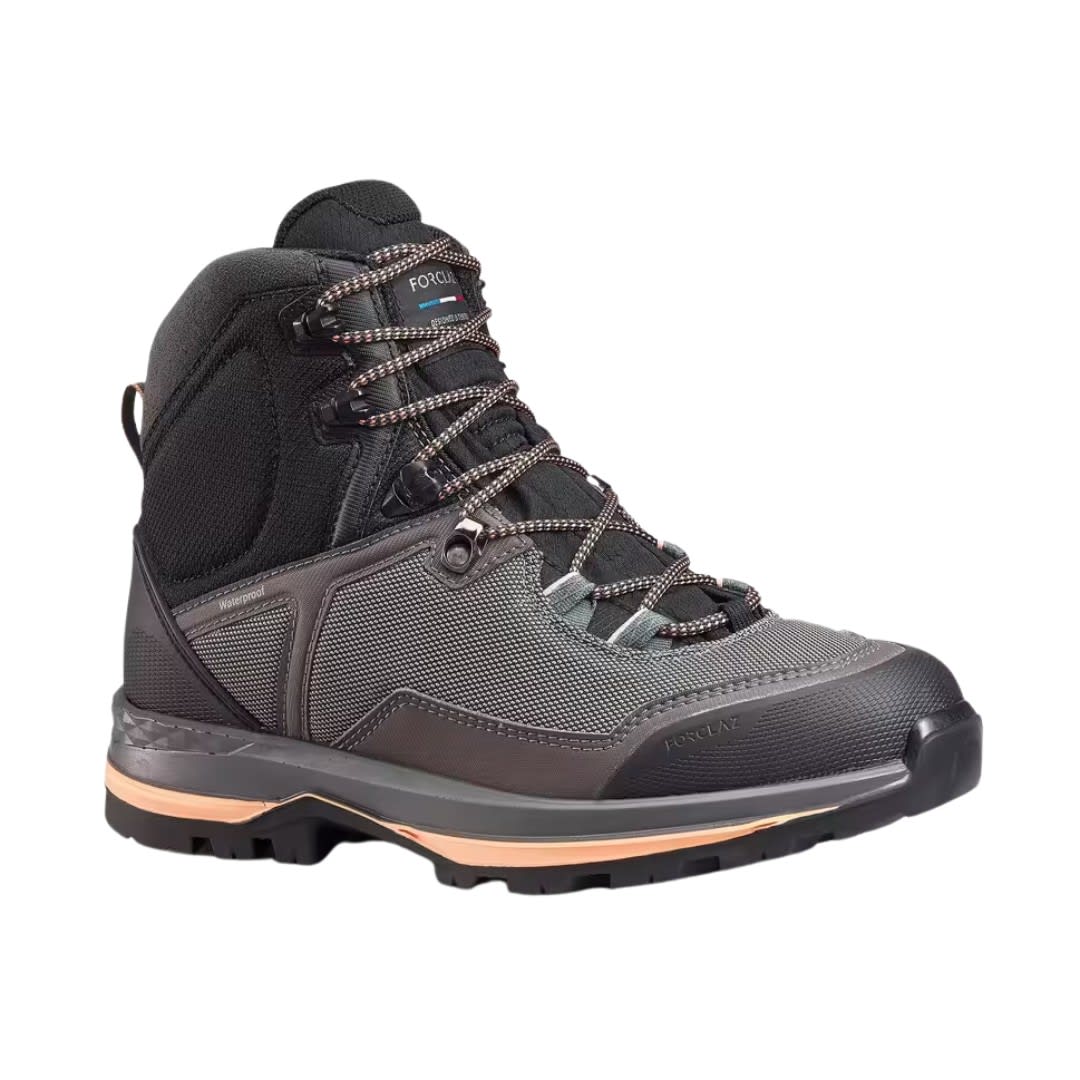
Step into comfort and explore nature with our waterproof boots. Designed for comfort and support, these lightweight boots provide the perfect balance of flexibility and support for a walk in nature.
Product Benefits
Adhesion
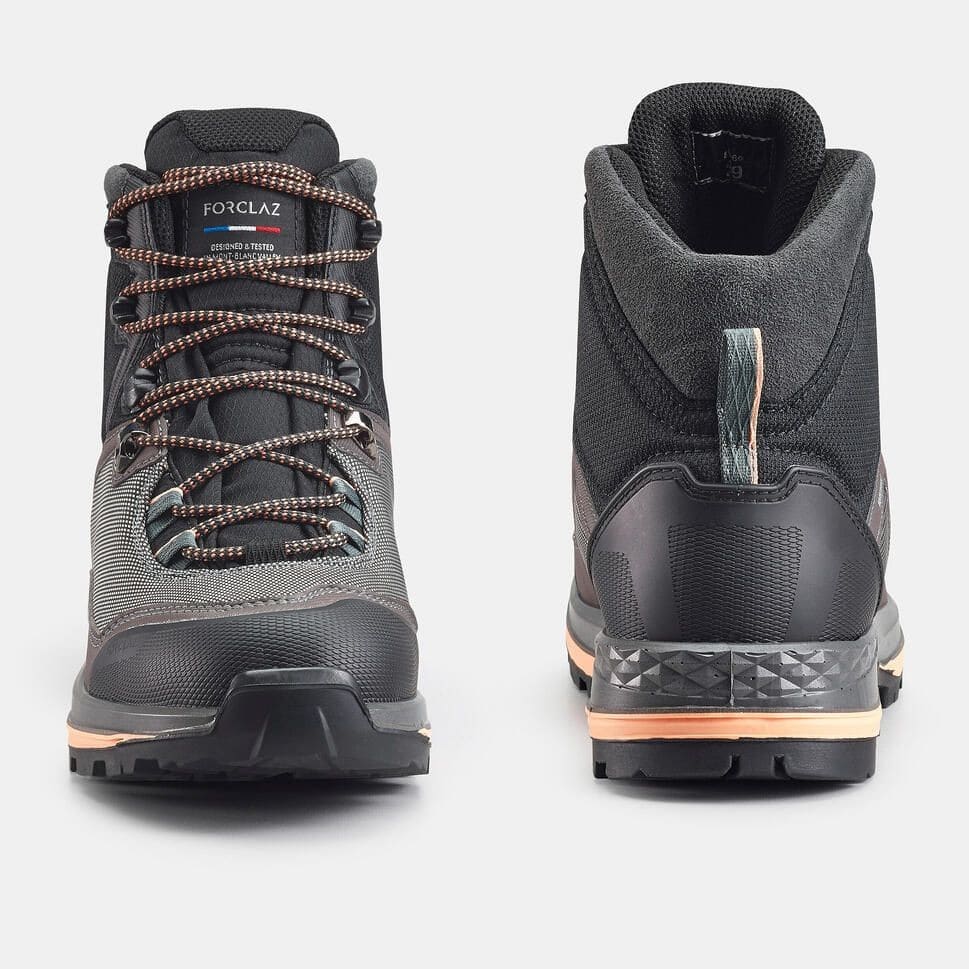
100% contact rubber sole, promoting grip and adhesion
Impermeability
Waterproof and breathable membrane (3 hours of walking in the rain)
Resistance
Materials and assemblies allowing great resistance of the shoe
Unrolled foot
Soft sole to facilitate walking, ideal for easy trails
Cushioned
Heel of the sole constructed with a cushioning material (PU)
Product maintenance
High flexible rod, equipped with 2 high hooks and 1 secure blocking hook
Weight
515 g per shoe in size 42
Technical information
Where are our trekking shoes made?
These Trekking shoes are manufactured within the European Union, in Romania, in a factory specialized in the production of trekking shoes.
The type of route for this shoe
This shoe is designed for rolling trekking routes generally at low altitude and/or on routes on easy marked trails.
Advantages and disadvantages of this textile model
Advantages
– Synthetic materials are light and flexible, offering immediate and undeniable comfort.
– Synthetic materials have good ventilation. (these synthetic models are more suitable for summer)
Disadvantages:
– To resist water, they must necessarily be combined with a waterproof membrane. (which is the case in all our Forclaz trekking shoe models)
– Maintain waterproofing over time with temporary treatments.
Contact technology for our soles
The grip and traction of our soles is labeled contact
To benefit from it, the shoe must pass laboratory tests to evaluate the grip coefficient on different surfaces (Smooth, Rough, Dry, Wet). To validate these tests, we have the quality of our soles evaluated in the field, in the mountains, by a representative panel of testers over 500 km
Its notching will also give you a suitable grip capacity on greasy and wet ground
The waterproofness level of this shoe
This shoe is validated on the waterproofing test at 10,000 repeatable flexes, or 15 km of walking in water up to mid-upper. This guarantees today a very good level of waterproofing at the level of the shoes.
–> Our evaluation indicates a level of 3/5 which offers a waterproofing of 6 hours of hiking in the rain.
The details of the tests carried out to evaluate the waterproofing of our shoes can be found a little further down.
Extend the waterproofness of this shoe
Even if this model has a membrane (waterproof-breathable) It is advisable to use a re-waterproofing spray a few times a year which will restore the original water repellency and combat external stains
–> This is actually to restore water repellency to the outer material (water beads up and does not seep in). Thus, each textile part will then be sprayed and above all do not forget the sewing threads. (water loves sewing threads!)
Maintaining your textile shoes step by step
1 / Use a brush and/or sponge to clean; remove any dirt or mud residue.
2 / Then let it air dry, away from a heat source.
3 / Shake the waterproofing spray can
4 / Spray on the product from a distance of 25 cm
5 / Leave to act for at least 10 minutes. Caution: Do not rub or wipe.
Increase the waterproofness of your shoe with a gaiter
The waterproofness of a shoe is often compromised by water getting in through the top of the shoe.
–> To keep your feet dry for longer, it is advisable to use a waterproof gaiter or mini-gaiter that will protect the top of the shoe from water ingress, but also from stones and sand.
Model perfectly suited to this model MT500 black trekking gaiter (8347880)
Choosing your shoe size is a major challenge.
For hiking, do not hesitate to take a size above your usual size to ensure optimal comfort on the descent and to prevent your toes from hitting the stop. Tip: keep your nails short and check before each descent that your lacing prevents your foot from sliding towards the front of